
Missing teeth change how you chew, how you speak, and how your face holds its shape over time. An implant replaces the root and the crown, so your bite works the way it used to, and your jawbone keeps its density.
At Hermirage Dental, we offer one of the best restorative dental treatments: dental implants in Edmonton, AB. Tooth implants replace missing teeth with natural-looking replacements that feel just like your own teeth.
From the initial consultation to the final restoration, we handle every step of the implant process with precision and care. Dr. Ranveer Chandy is a graduate of the Henry M. Goldman School of Dental Medicine at Boston University. He stays current with the latest advancements in implant dentistry to restore teeth precisely and comfortably. Our office works with local dental labs and implant surgeons for successful implant placement.

What are Dental Implants?
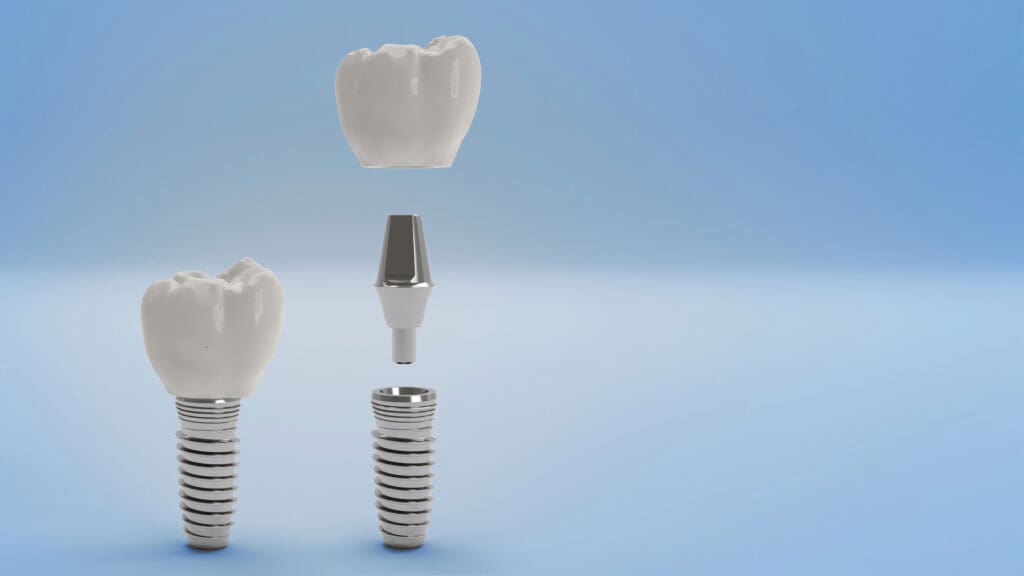
Dental implants are small titanium posts that replace missing tooth roots. An abutment, or connector piece, then connects the implant post to a restoration.
Implant posts act as artificial tooth roots and fuse with your jawbone. Once the implant is securely in place, it serves as a strong foundation for a replacement tooth or restoration.
A connecting piece, called an abutment, is placed on top of the implant post to connect the implant to your restoration. The restoration can be a custom dental crown, dental bridge, or even a full set of dentures.
Because dental implants fuse with your jawbone, they provide unmatched stability and function compared to other replacement options. They look and function just like real teeth. You’ll be able to eat, talk, and smile confidently again.
The Benefits of Dental Implants
Tooth implants are a popular tooth replacement for a reason. The top benefits of dental implants in Edmonton, AB, include:
- Permanent Solution: With proper care, dental implants can last a lifetime. Unlike dentures, which may need to be adjusted or replaced over time, implants are a permanent part of your smile.
- Prevent Bone Loss: When you lose a tooth, the jawbone begins to deteriorate over time. Dental implants help prevent this bone loss by mimicking the function of a tooth root. The post keeps the bone healthy and strong.
- Superior Comfort: Since implants are anchored directly into the bone, they feel just like your natural teeth. You can eat your favorite foods without worry. Implants also prevent shifting or movement, unlike dentures that can sometimes slip.
- Natural Appearance: Each replacement tooth is custom-made to blend seamlessly with your surrounding teeth. After a dental implant procedure with us, you will have a smile that looks and feels completely natural.
Who is A Good Implant Candidate?
Most adults with missing teeth are candidates for dental implants. During your initial implant consultation, Dr. Chandy will evaluate your overall health, gums, and jawbone. Here are the main factors he will consider:
- Jawbone Health: You need enough healthy bone to support the implant. Bone loss can happen after tooth loss, but a bone graft can rebuild it.
- Gum Health: Your gums must be healthy before placing an implant. Because gum disease can increase the risk of implant failure, we’ll treat any gum problems before starting implant treatment.
- Overall Health: Diabetes, autoimmune disorders, or smoking can increase the risk of implant failure. Dr. Chandy will review your medical history and may work with your doctor to make sure you can get implant surgery.
Types of Dental Implants
The right option depends on how many teeth you’re replacing and what your bone and gums can support.
- Single tooth implant: If you have one missing tooth, a single implant post and crown can replace it. This is the most common implant case, and it protects the teeth on either side of the gap.
- Implant-supported bridge: Two or more implants support a bridge that replaces several missing teeth in a row. This works well when you’ve lost multiple adjacent teeth but have healthy bone in the area.
- Implant-supported denture: A few implants anchor a full or partial denture so it stays in place. You don’t need adhesive, and the appliance won’t slip when you eat or speak.
- Full-arch restoration: For patients missing all their teeth in one or both arches, a full-arch restoration uses strategically placed implants to support an entire set of replacement teeth. This approach often avoids the need for bone grafting and can restore full function.
The Dental Implant Process at Hermitage Dental
Getting dental implants is a multi-step procedure that can take months to a year or more, depending on your oral health. Here’s a detailed overview of dental implant treatment in our Edmonton, AB dental office.
Initial Consultation and Evaluation
Your journey begins with a comprehensive exam. During this visit, Dr. Chandy will review your dental health, medical history, and specific needs.
Our office will take digital X-rays so Dr. Chandy can zoom in, adjust contrast, and show you exactly what he sees. We’ll also take 3-D scans of your mouth to assess bone structure and decide the best placement for the implant. Dr. Chandy will discuss your treatment plan and timeline and address any questions.
Pretreatments
If you have insufficient jawbone or other issues, you may need preparatory procedures to create a stable foundation. Our office may recommend bone grafting, sinus lifts, or tooth extractions to build up healthy jaw bone or remove infected or damaged teeth. We can also treat gum disease if needed. Healing for these procedures can take several weeks or months.
Implant Placement
Once your mouth is ready, our implant surgeon will place the implant into the jawbone where the missing tooth’s root was. The pain-free implant surgery includes local anesthesia and sedation so you feel comfortable.
Healing
After placement, healing begins. The implant undergoes osseointegration, a healing process where the bone fuses with the implant. This phase typically lasts 3 to 6 months and is important for the stability and success of the implant. You will have a temporary cap or restoration over your implant or implants as you heal.
Abutment Placement
After successful integration, you will return to our office. One of our dentists will attach a small connector piece to the top of the implant. This minor procedure is typically done in under 30 minutes. The abutment will hold the final crown, bridge, or denture in place.
Custom Implant Restoration
Once your gums have healed around the abutment, we’ll take impressions of your mouth. We send your impressions to a local dental lab, where experienced technicians craft your custom restoration.
Our office sends the exact specifications to the lab, including the shade and measurements, so your final restoration will perfectly fit in your mouth. Once your restoration is ready, we’ll make adjustments as needed for your comfort.
Follow-Up and Maintenance
Regular follow-up appointments are important to monitor the implant and your oral health. The results are a functional, long-lasting, and aesthetically pleasing solution for your missing teeth.
Dental Implant FAQs
Are you interested in implants but want to learn more? Read answers to common questions about dental implants in Edmonton, AB.
What is the success rate for dental implants?
Dental implants have a success rate of over 95%. Your implants will only fail if you have a tooth or gum infection, or if the implant was placed incorrectly. This is rare and we’ll ensure you don’t smoke or use tobacco products during implant treatment, which can increase your risk of implant failure.
How long will my dental implants last?
The titanium implant post is designed to last a lifetime with proper care. The crown or restoration on top, however, may need to be replaced every 10 to 20 years due to normal wear and tear.
What implant recovery tips do you have?
Recovering from dental implant surgery is usually quick and straightforward. Most patients return to normal activities within a day or two. Follow these tips for a smooth recovery:
- Rest and use ice: Take it easy for 24 hours after your implant surgery. Apply ice packs to reduce swelling.
- Eat soft foods: Stick to yogurt, soup, and smoothies. Avoid hot drinks and straws.
- Manage pain: Take over-the-counter pain relievers as directed.
- Keep it clean: Do not brush the surgical site for 24 hours. Rinse gently with warm salt water after that.
- Avoid tobacco and alcohol: Both slow healing and increase risks.
- Attend follow-ups: Dr. Chandy will check your progress and answer questions.
Call us if you have severe pain, excessive bleeding, or signs of infection. We are here to help.
How much do implants cost in Edmonton?
The cost of implant treatment depends on these factors:
- How many teeth you’re replacing
- Whether you need a bone graft or other pretreatment
- What type of restoration you choose
A single implant costs far less than a full-arch restoration. Dr. Chandy provides a written estimate at your consultation, so there are no surprises.
We follow the Alberta Dental Fee Guide, which means our pricing matches the rates set by the Alberta Dental Association. You’ll never be overcharged, and you’ll never get a surprise bill for a service you didn’t authorize.
Will I be asleep when I get dental implants?
No. You will be under local anesthesia and/or sedation, but you will not be asleep. During implant treatment, you will be awake but calm and comfortable throughout the procedure. We’ll make sure you won’t feel pain when you get implants.
Can I get a dental implant years after losing a tooth?
Yes. However, you may have lost some jawbone density in that area. Our office will take 3-D scans to evaluate your bone level. If you have lost bone, a bone grafting procedure can rebuild enough support for a successful implant.
Restore Your Smile with Implants Today
If you’re missing one or more teeth, contact us to learn how dental implants can improve your oral health and confidence. Call Hermitage Dental for your implant consultation in Edmonton at 587-806-4168 or request an appointment online anytime. We’re proud to serve Hermitage, Dunluce, Fort Saskatchewan, Sherwood Park, and other Northern Edmonton communities.